
Shaped stone work
Waterjet cutting for stone
Curves, lettering and inlays, cut from stone. Waterjet follows a programmed drawing to create shaped components and openings for architectural details, signage and custom features. We review the material, design, dimensions and finish before confirming the work we can undertake.

Shaped work
Inlays, lettering, curves and openings.
To start
A photo or sketch is enough.
Your quote
Cutting, finishing and installation are listed separately.
From drawing to shaped stone
Waterjet cutting uses water and abrasive along a programmed path. It enables shaped details that call for a different approach from straight slab sizing. The chosen stone, geometry and handling needs are reviewed before the cut is confirmed.
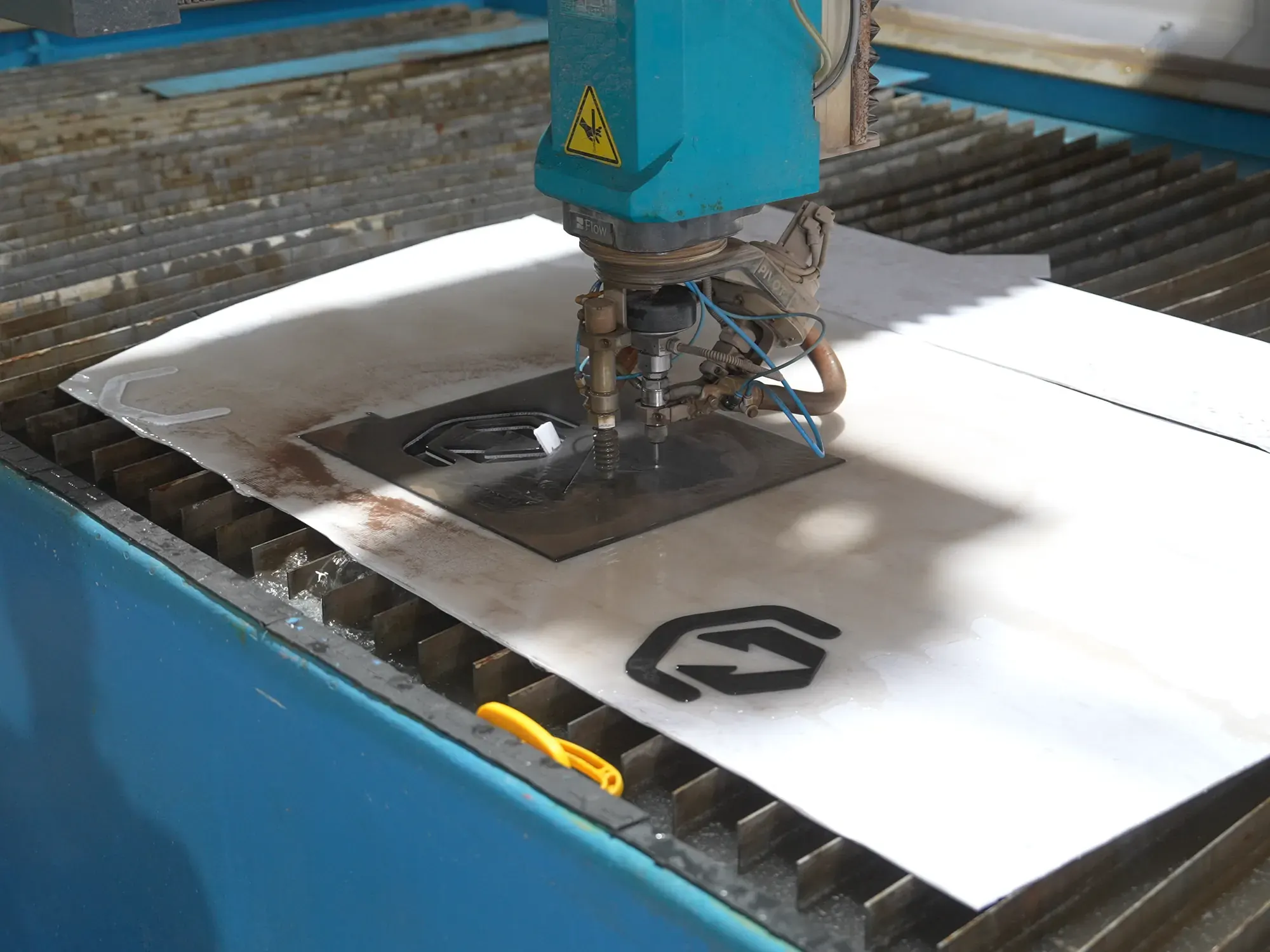
Waterjet cutting in the workshop
Drawing
We check your latest drawing and the finished size.Shape
We check thin sections and tight inside corners.Finish
We plan finishing after the cut.
Shape, pattern and identity
Use waterjet for curves, inlays, lettering and shaped openings where the selected product and design allow. Think about the finished piece as well as the outline: visible edges, joins, supports and installation all affect the detail.
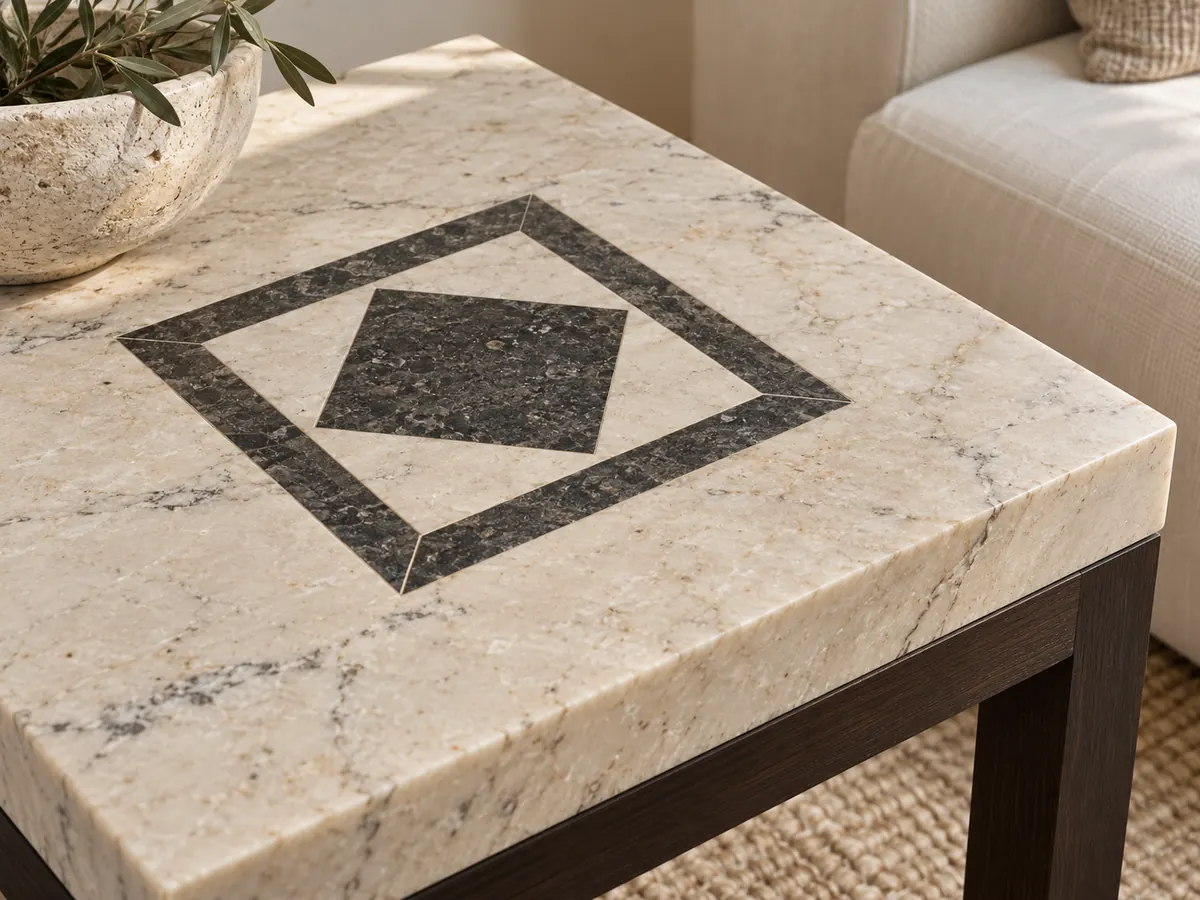
Inlays
Shaped inserts and the pattern they sit in.
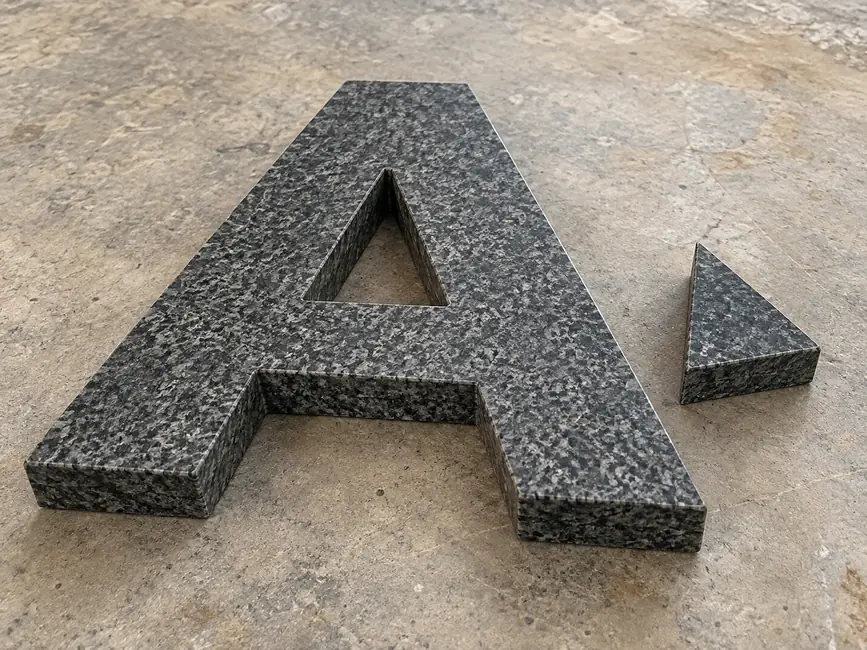
Lettering
Separate stone pieces or an inset sign.
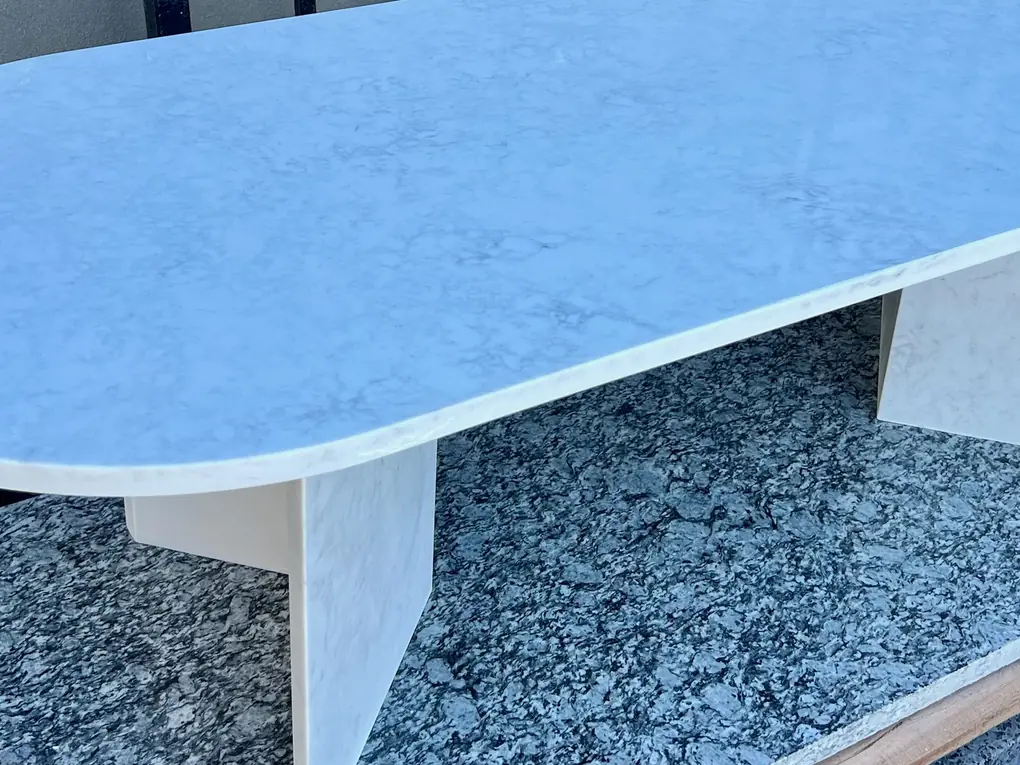
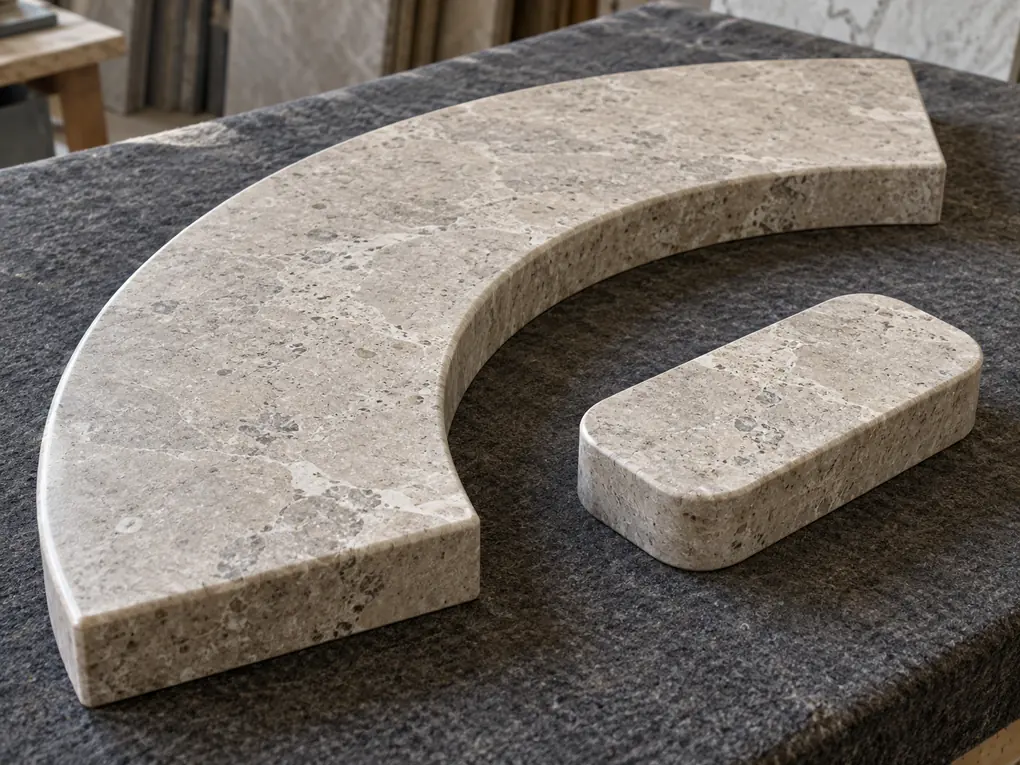
Curves
Curved counters, panels and feature pieces.
Openings and repeats
Sink and hob cut-outs, and repeated shapes from your drawing.
Information for each detail
We check fine details against the stone before we cut.
Inlays and lettering
For inlays, send the surface they sit in, the joint widths and how they will be assembled. For lettering, send stroke widths, mounting and viewing distance.
Curves, openings and repeats
For curves, we need the finished edge and support detail. Cut-outs need fixture templates. Repeat parts need quantities, a material check and the standard you expect.
Send the drawing at the right scale
Share dimensioned artwork or a part drawing, with quantities and the material name and thickness. A logo image can explain the intention, but cutting needs suitable geometry. Ask us which drawing format is needed for your design.
To get started
Artwork, size, quantity, material, thickness, location and use.
Before we cut
Scaled drawing, cut outline, edge finish and fixing detail.
The drawing and finished detail
Send what you have. We will say what else we need.
We will tell you which file format and drawing preparation we need. A sketch starts the conversation, but we cut from a final outline with dimensions.
For your own slab, see Stone supply & trade services.
The detail decides what can be cut
Small lettering, tight corners and slender stone sections need particular care. We review the proposed feature size, material condition and support rather than applying a universal tolerance or accepting every drawing unchanged.
Stone and thickness
How the stone behaves at narrow sections and edges.
Small details
Fine lettering and points can be fragile.
Inside corners
Corner curves, fixture clearances and the stone left around them.
Finish and fixing
Visible edges, backing and installation position.
Material, shape and finishing checks
We check your drawing and material together.
Send the exact product and its condition. Fragile connections, sharp points and closely spaced cuts may need a revised shape or extra support.
We check corner curves and fixture clearances against the stone that remains. An edge that will show may need further finishing.
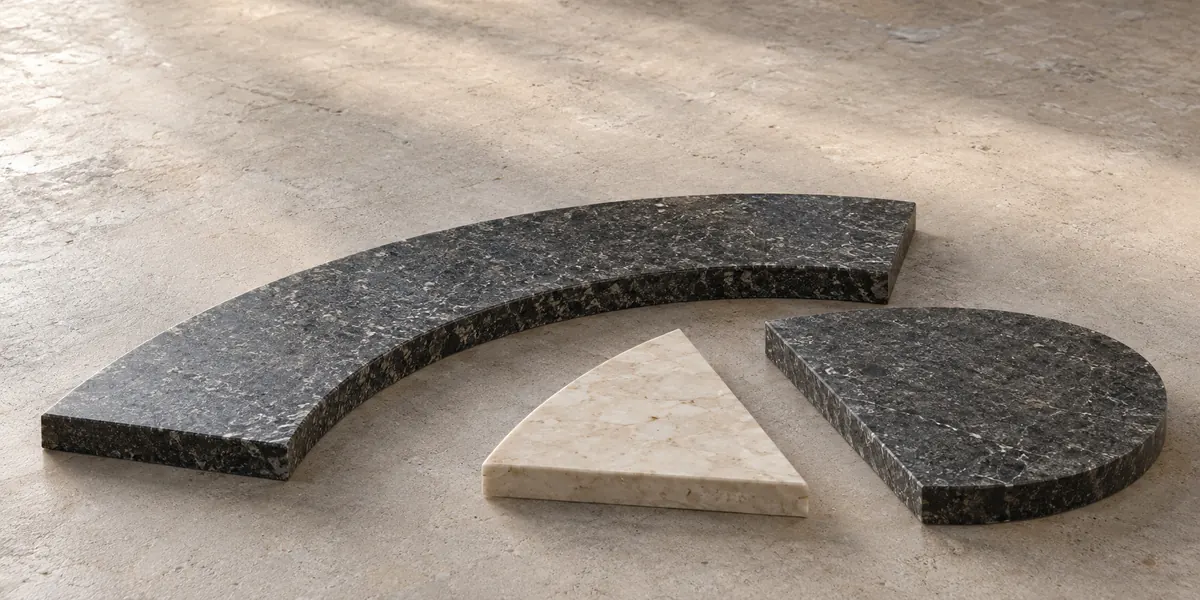
A cut component or a finished feature?
Cutting is one stage of the work. Your piece may also need edge finishing, assembly, backing, transport or fitting. Describe the final use so the quote can identify the operations and responsibilities you need.
Cutting
We quote from your final drawing and chosen stone.
Edges and assembly
Finishing for the edges that will show.
Installation
Handling, support and fixing for your job.
What the quote needs
Tell us whether you need cut pieces, finished edges, assembly or installation.
Your quote lists what we supply, make and install, and what's left to other trades. It also covers drawing preparation and final handover.
Cutting and finishing
For cutting, send the latest drawing, material and quantity. Edge work and assembly also need the visible faces, inlay joint, backing and a finish sample.
Delivery and installation
Delivery and installation need the location, the wall or base the stone fixes to, access and fixing details. Tell us who provides fixings, electrical work and supporting construction.
Waterjet-cut signage in a retail project
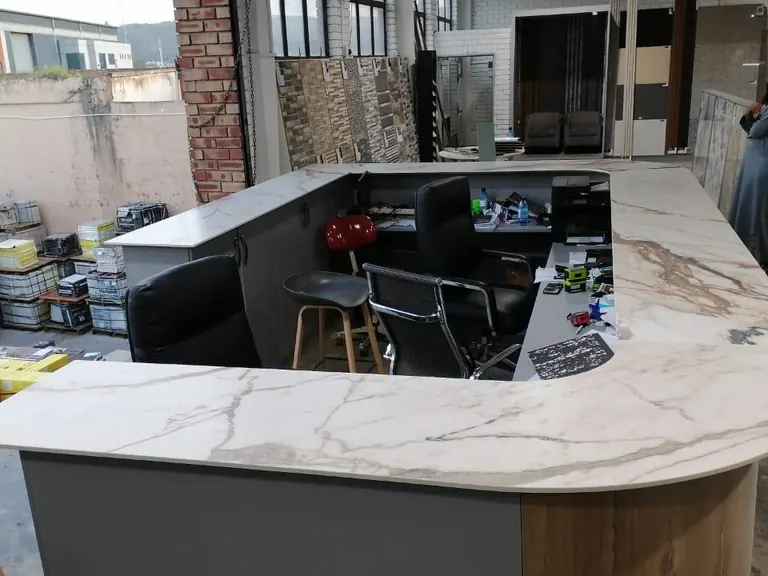
Umgeni Business Park, Durban
The Tile Co
StoneCo delivered counters, cladding and waterjet-cut signage.
Stone on the customer counter, the wall and the sign.
Reception and customer counters
Stone cladding
Waterjet-cut signage
View projectWaterjet questions
They need a way to stay in place. Show whether the letters are separate pieces or openings in a panel, and how the centres of letters like A or O will be held.
Every material, its thickness and each pattern piece. Add the floor level, joint widths, backing and who will assemble and install the inlay.
Ask us. We can tell you whether a trial cut can be quoted for your stone and shape. We settle the sample, cost and timing before the full order.
No. A photo or sketch is enough to start. We then explain which drawing or file format is needed before cutting.
Possibly. Send the product name, thickness, slab size and condition, along with your design. We accept the job once we know the stone and how it can be handled.
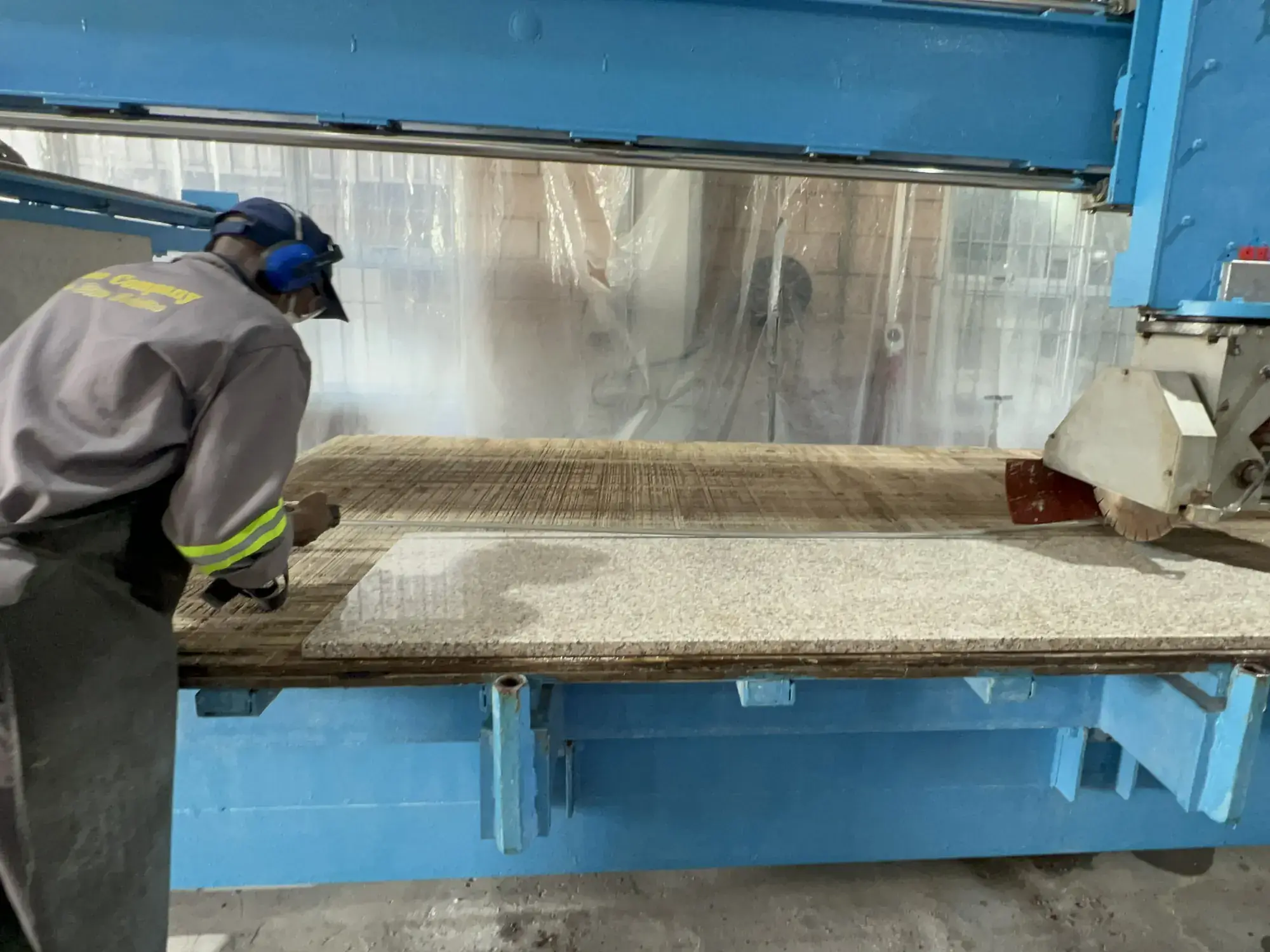
Show us the shape and its final use
Share your drawing or artwork, material, dimensions and quantities. Tell us whether you need a cut part, a finished component or fitting as part of the project.
